The first public gaming houses
From regulated rooms in Renaissance Italy to the resort casinos of eighteenth-century Europe, discover why governments moved gaming from private salons into supervised spaces.
Enter the early rooms →A Canadian editorial archive
Four centuries of gaming houses, celebrated rooms, vanished landmarks, changing rules and the machines that transformed an industry—examined as social and material history.
A casino is more than a place of play. It is an institution shaped by law, urban growth, hospitality, engineering and changing ideas about public leisure. These collections follow each strand separately, then reconnect them.
From regulated rooms in Renaissance Italy to the resort casinos of eighteenth-century Europe, discover why governments moved gaming from private salons into supervised spaces.
Enter the early rooms →Monte Carlo, Las Vegas, Baden-Baden, Atlantic City and Macau each produced a different relationship between spectacle, tourism, regulation and place.
Tour the landmarks →The Dunes, Sands, Desert Inn and Stardust disappeared, but their designs and operating ideas survive in later resorts and popular memory.
Visit the lost archive →Mechanical reels became electrical cabinets, video displays and networked systems. Trace what changed inside the machine—and in the experience around it.
Follow the mechanism →Rules travelled across languages and borders. Printing, professional dealing, mathematical analysis and regulation gradually turned local customs into familiar games.
Study the rules →From courtly salons to carpeted megaresorts and daylight-filled contemporary floors, casino interiors reveal changing theories of comfort, control and spectacle.
Read the interiors →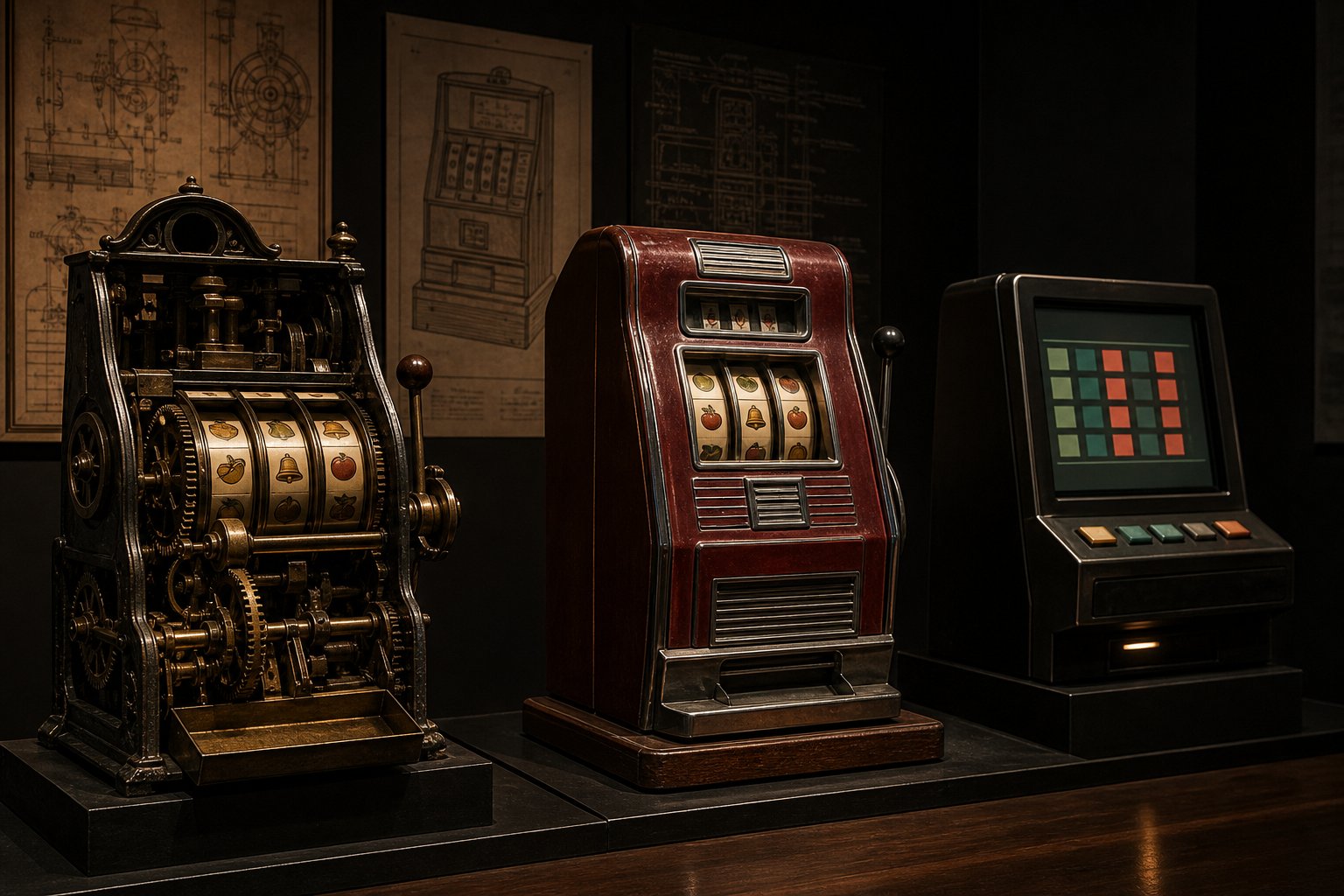
Object history
The familiar reel machine is the result of repeated reinvention: compact mechanical logic in the 1890s; illuminated electromechanical cabinets after the Second World War; video screens and microprocessors in the 1970s; then networked accounting and ticket systems.
Our machine history separates engineering changes from the myths that later grew around them.
Explore the complete timeline →Opened in 1863 and shaped by architect Charles Garnier in the 1870s, the Monte Carlo complex used architecture, performance and controlled exclusivity to help transform a small principality into an international resort.
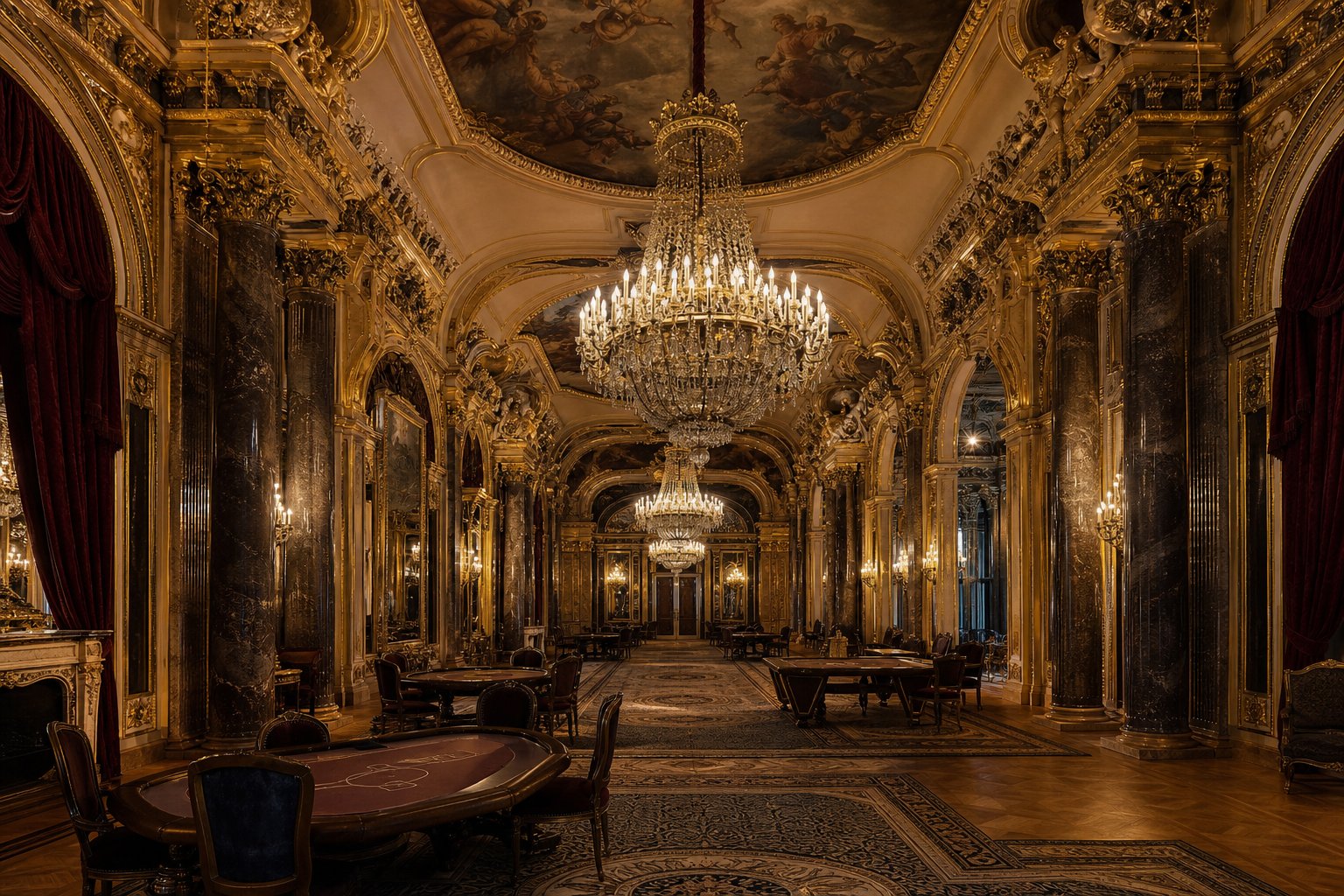
Monte Carlo joined gaming rooms to opera, gardens, hotels and rail travel. Its importance lies not only in visual splendour but in the resort model it helped consolidate: entertainment as a coordinated destination economy.
Read the monographCashiers, dealers, inspectors, cameras, databases and regulators rarely appear in popular images of casino history. Yet their work made large, continuously operating venues possible.
Standardized dealing procedures, shift systems and hospitality training turned an assortment of rooms into a repeatable service operation.
From floorwalkers and mirrored observation to camera networks and formal compliance, supervision expanded alongside scale.
Computerized accounting, player tracking and networked machines created new efficiency—and new questions about privacy and responsible use.